Category: Spotlight

Represents posts that are being highlighted.

  • House Of Tone WideOnes – Pickup Review

    In this review, we’re going to take a look at the House of Tone WideOnes, which are wide-range humbucking pickups built in the United Kingdom. I tested these pickups using a home-built Telecaster with a Warmoth alder body with F-holes & a maple Pau Ferro neck. I played the same exact 30-second riff in a number of contexts: straight into a clean amp, through a Vemuram Jan Ray with very light gain, and with a Wampler Moxie in high-gain mode. The amplifier I played through is a MusicMan RD-50 through a Universal Audio OX.

    Unboxing

    I purchased these directly from House of Tone. Matt Bascetta was super helpful with setting up my order, and shipping to the United States was a breeze. The pickups arrived in perfect condition and came in the gorgeous wood box you see pictured above. First class all the way.

    Construction

    I found the construction of these pickups to be flawless. The word “sturdy” would be an understatement. The adjustable pole pieces were easy to raise and lower, yet not flimsy or likely to go down on their own. I requested a raw nickel finish on these and was very pleased with that choice. Extra mounting screws were included with my order, which I thought was a nice touch, considering that wide-range pickups require twice as many screws as typical humbuckers.

    How Do the WideOnes Sound?

    The bridge pickup had an undeniable twang to it, but I would not go so far as to say that it steps over the line into “Tele” territory. But there is no doubt that it leans away from your typical “macho” bridge humbucker and lands nicely in the “solid yet snappy” range of tone. For surf-rock style playing, this one is a no-brainer. There’s more than meets the eye, though – when I cranked up my overdrive pedal, I was pleasantly surprised at how well this pickup held its own. Anything in the range of blues, classic rock, funk, or pop would be an absolute breeze.
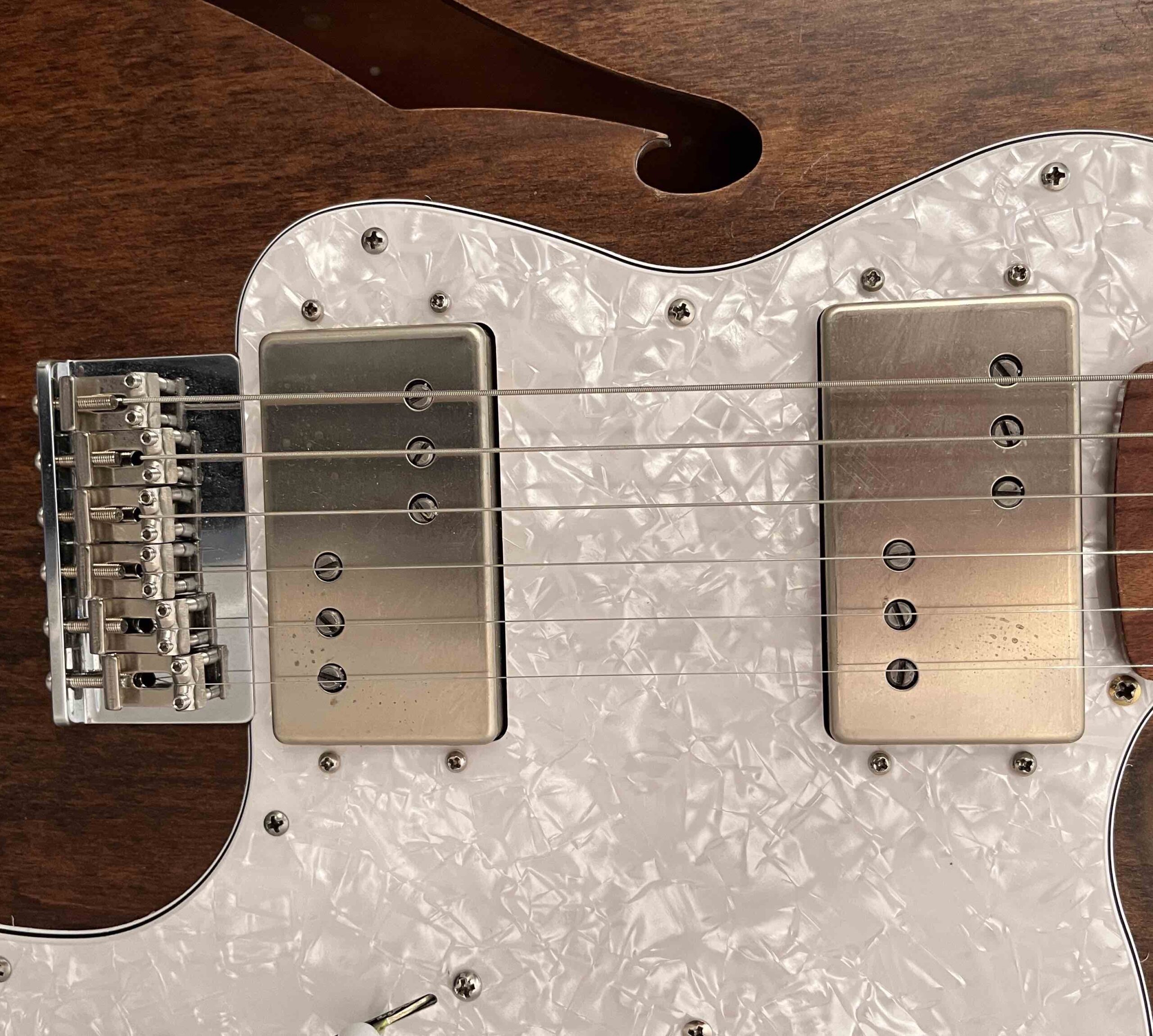

    The neck pickup was so bouncy and playful that I almost couldn’t put my guitar down. Like the bridge pickup, there is plenty of single-coil, bell-like charm. But the Wide One neck position has a “bigness” to it that really stood out. Clean tones were full and alive, but overdrive was like a welcome friend with gobs of tone oozing out of the speakers. From warm & fat to juicy & Stratty, it was all there. When I finally stopped playing, I felt like I had ice cream all over my shirt.

    The one word that kept popping up in my mind with the House of Tone WideOnes was “clarity”. Whether I was going straight into the amp, using light breakup or tons of drive, the clarity of these pickups was impressive.

    Volume Knob Rollback

    I tested this set while using the Lindy Fralin Volume Kit. With the volume knob rolled down the bridge pickup was pretty bright, which is to be expected. This is a sound that would be perfect for a James Brown type of funk, surf or a range of pop styles. With the neck pickup, there was a plethora of usable sounds. Nearly the entire travel of the volume knob yielded a beautifully crisp and sparkly tone.

    Summary

    They say you only get one chance to make a first impression. Well, this was an outstanding first impression. I could not have made a better choice with my first set of pickups from House of Tone. Now I am of course wracked with curiosity and want to try more of their products. Considering the outstanding tone of the WideOnes, and all the positive feedback I’ve come across about House of Tone, I have no doubt that my second impression will be as good as my first.

    How to Contact House Of Tone Pickups

    houseoftonepickups@gmail.com
    Tel: +44 (0)779 169 1251
    Mail:
    House Of Tone Pickups
    96 Northgate St.
    Chester
    CH1 2HT United Kingdom

    Helpful Links

    House of Tone Pickups
    House of Tone WideOnes

  • DiMarzio Area 58 Pickup Review (DP415)

    When it comes to recreating vintage Strat tones without the baggage of vintage noise, DiMarzio’s Area series has long been a go-to choice. Of the bunch, the Area 58 stands out to me as one of the most satisfying single-coil pickups ever made. It’s a modern solution to a vintage problem—a clever design that captures the chime and clarity of a great late-‘50s Strat pickup, minus the hum and the unpredictability. I’ve had the pleasure of using the Area 58 extensively, and this review reflects both my technical observations and personal experiences.

    Technical Details

    The DiMarzio Area 58 is a stacked hum-canceling single-coil pickup, built to fit in a standard Stratocaster-style single-coil route with no modifications required. It uses Alnico 2 magnets and comes wax potted to prevent microphonic feedback—a big plus for live use or high-gain situations. The DC resistance clocks in at 6.15K, which puts it squarely in vintage territory in terms of output. It’s available in a wide range of cover colors, including classic options like Aged White, Black, and Cream, as well as more expressive choices like Pink, Blue, and Chrome.

    One of the key innovations here is the reduced magnetic pull. In vintage pickups, strong magnets could dampen string vibration, subtly robbing the instrument of sustain and resonance. DiMarzio addressed this by using a specially calibrated magnetic field that minimizes that pull without compromising tone. The result? Your strings breathe more, ring longer, and interact with the pickup in a very natural way.

    Historical Context And Design Philosophy

    The name “Area 58” isn’t just clever branding—it’s a direct nod to a standout Strat pickup from 1958, one that happened to hit the tonal jackpot thanks to the inconsistencies of hand-wound manufacturing at the time. Not every ’50s pickup sounded amazing, but the ones that did became legends. DiMarzio reverse-engineered that magic, aiming to distill the clear, dynamic tone of that exceptional pickup while eliminating common issues like 60-cycle hum and inconsistent output.

    The Area 58 doesn’t aim to hot-rod or radically reinvent the Strat sound. Instead, it preserves what makes the classic tone great: glassy highs, scooped mids, fast transient response, and an unmistakable bell-like quality. But it does so with the predictability and quiet operation that only modern engineering can offer.

    My Personal Thoughts About The DiMarzio Area 58

    I’ll cut to the chase: the DiMarzio Area 58 is one of my favorite guitar pickups of all time.

    It installs effortlessly in a vintage single-coil route, making it a great choice for anyone looking to upgrade a classic Strat or build a partscaster without routing or body mods. Once installed, the first thing you’ll notice is how quiet it is. There’s virtually no 60-cycle hum, even under fluorescent lights or high-gain conditions. It’s not just quieter than vintage pickups—it’s quieter than many modern ones.

    Tonally, the Area 58 nails that vintage chime. The clean tones are articulate, with a slightly scooped midrange that gives chords a piano-like depth and single notes a sparkling clarity. But what really surprised me was how well it holds up under gain. Whether you’re running a transparent boost, classic overdrive, or something more aggressive, the Area 58 maintains its composure. It’s slow to break up, and that’s a good thing. Instead of compressing and getting muddy, it retains note separation and harmonic complexity, even when you’re pushing it hard.

    Another standout feature for me is how well it interacts with 500K pots. This is a big deal if you’re mixing single coils with humbuckers in the same guitar. Most traditional single coils sound thin or overly bright with 500K pots, but the Area 58 sounds surprisingly balanced—still clear and chimey, but not piercing. That alone makes it a strong contender for hybrid setups.

    Height adjustment also plays a big role in dialing in the tone. Mount it a little lower and you get a more open, airy sound—brighter and glassier. Raise it up and you get a thicker, more saturated tone with added sustain and warmth. It’s a very responsive pickup that rewards experimentation.

    In terms of placement, I’d recommend the Area 58 for neck or middle positions. In the neck, it gives you that syrupy, bluesy tone that sings on clean passages and cuts beautifully through a mix when dirty. In the middle, it works great for quack tones in combination positions. For the bridge, I tend to want something a bit hotter or more mid-focused, so the Area 58 might not be my first pick there—but of course, your mileage may vary.

    Summary

    The DiMarzio Area 58 is a near-perfect example of vintage tone meeting modern engineering. It brings the airy sparkle and dynamic response of a great ‘50s Strat pickup, while solving key problems like hum, magnet pull, and compatibility with high-gain rigs. Whether you’re playing jazz, blues, classic rock, or ambient textures, it delivers clarity, warmth, and character in equal measure.

    For players who love vintage single-coil tone but need modern performance—or who want a Strat neck or middle pickup that pairs nicely with humbuckers—this is a standout option. The Area 58 is more than a tribute to a golden-era sound; it’s a thoughtful reinvention that respects the past while fully embracing the present.

    Highly recommended.

  • Seymour Duncan SM-2 Pickup Review

    The Seymour Duncan SM-2 is a mini-humbucker designed for players who want a punchier, more aggressive sound from a compact pickup. It’s part of the SM series—well-suited for guitars like Gibson Firebirds, Les Paul Deluxes, and others that use mini-humbucker routes.

    The SM-2, also known as the Custom Mini Humbucker, is the hottest model in the lineup. It was developed for players looking to push amps harder, with more output and edge than vintage-style pickups typically offer. Thanks to its ceramic magnet and high DCR, the SM-2 stands apart from lower-output mini-humbuckers, offering a tone profile that works well for modern rock, blues, and even funk or pop settings.

    My Personal Thoughts About the Seymour Duncan SM-2

    This is easily one of my favorite pickups of all time—and that’s saying something.

    One of the most interesting things about the SM-2 is how well the bridge and neck models complement each other. I almost never use the same model pickup in both positions. Usually, I want my bridge pickup to be hot and mid-focused, and my neck pickup to be gentler, with more brightness and scooped mids. The SM-2 is one of the rare exceptions where I get the exact combination that I need.

    The bridge version clocks in at over 16K Ohms, and it’s got more than enough punch to stand up to any full-size humbucker. You could use this for hard rock with no problem. The blade-style design ensures that drop-outs aren’t an issue, and I’ve noticed that sustain is really impressive—there’s a kind of “anchor” quality to the tone that stays rock-solid even when you’re pushing a clean amp into overdrive.

    The neck model? Totally different feel. It sits at a pretty tame 8K Ohms and has this bouncy, elastic character that’s somewhere between a low-output humbucker and a slightly dark single coil. It’s snappy, tight on the low end, and very responsive. When you roll the volume down with a treble bleed mod, the tone sparkles in a way that reminds me of a great single coil. I could play clean soul, Motown, or indie-pop all day with this neck pickup—it’s just that expressive.

    There’s also a kind of natural compression to both pickups. It’s subtle—you don’t lose any dynamics—but there’s a smoothness to how they respond, especially with fingerpicking or soft attack.

    Another standout feature is how well both pickups split. The bridge in split mode gives you that tight, funky quack that’s right at home in a JB-style groove or even country twang territory. The neck in split mode gets jangly and open, almost Rickenbacker-bright. Both pickups played in parallel produce an amazing clean tone—perfect for punchy Motown or bright ‘60s rhythm parts.

    Overall, this is a phenomenally versatile pickup set. I’ve used it for blues, pop, classic rock, and hard rock—and I wouldn’t hesitate to take it into a session for anything from clean jazz fusion to crunchy power pop. If you’re looking for a mini-humbucker that doesn’t box you into a single style, the SM-2 is a serious contender.

    Summary

    The Seymour Duncan SM-2 is a mini-humbucker that punches far above its weight. With ceramic magnets, blade pole pieces, and a high-output voice, the bridge model delivers authority and sustain that rivals full-sized humbuckers. Meanwhile, the neck model offers clarity and dynamics that make it an ideal companion—especially when split or used with a treble bleed circuit. Whether you play clean, dirty, or somewhere in between, this is one of the most versatile and musically satisfying pickups I’ve ever used. A standout in the Seymour Duncan lineup.

    Technical Details

    Model: SM-2 Custom Mini Humbucker
    Type: Mini-Humbucker
    Magnet: Ceramic
    DC Resistance: 16.7K (bridge), 8.5K (neck)
    Wiring: Four-conductor
    Potting: Wax potted
    Retail Price: $119
    Street Price: As low as $85 on Reverb or eBay
    Product URL: https://www.seymourduncan.com/single-product/custom-mini-humbucker