Tag: Pickups

  • House Of Tone WideOnes – Pickup Review

    In this review, we’re going to take a look at the House of Tone WideOnes, which are wide-range humbucking pickups built in the United Kingdom. I tested these pickups using a home-built Telecaster with a Warmoth alder body with F-holes & a maple Pau Ferro neck. I played the same exact 30-second riff in a number of contexts: straight into a clean amp, through a Vemuram Jan Ray with very light gain, and with a Wampler Moxie in high-gain mode. The amplifier I played through is a MusicMan RD-50 through a Universal Audio OX.

    Unboxing

    I purchased these directly from House of Tone. Matt Bascetta was super helpful with setting up my order, and shipping to the United States was a breeze. The pickups arrived in perfect condition and came in the gorgeous wood box you see pictured above. First class all the way.

    Construction

    I found the construction of these pickups to be flawless. The word “sturdy” would be an understatement. The adjustable pole pieces were easy to raise and lower, yet not flimsy or likely to go down on their own. I requested a raw nickel finish on these and was very pleased with that choice. Extra mounting screws were included with my order, which I thought was a nice touch, considering that wide-range pickups require twice as many screws as typical humbuckers.

    How Do the WideOnes Sound?

    The bridge pickup had an undeniable twang to it, but I would not go so far as to say that it steps over the line into “Tele” territory. But there is no doubt that it leans away from your typical “macho” bridge humbucker and lands nicely in the “solid yet snappy” range of tone. For surf-rock style playing, this one is a no-brainer. There’s more than meets the eye, though – when I cranked up my overdrive pedal, I was pleasantly surprised at how well this pickup held its own. Anything in the range of blues, classic rock, funk, or pop would be an absolute breeze.
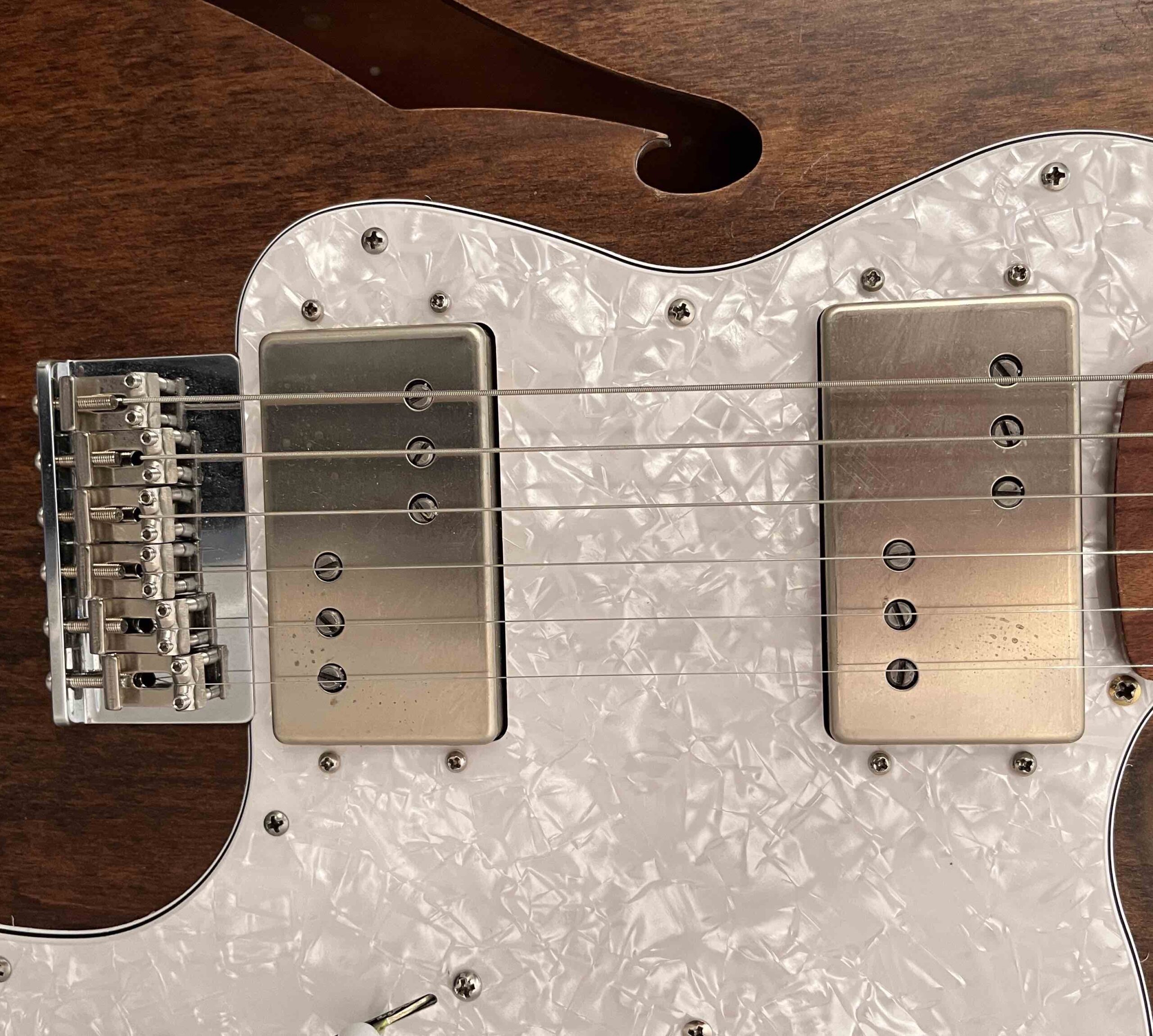

    The neck pickup was so bouncy and playful that I almost couldn’t put my guitar down. Like the bridge pickup, there is plenty of single-coil, bell-like charm. But the Wide One neck position has a “bigness” to it that really stood out. Clean tones were full and alive, but overdrive was like a welcome friend with gobs of tone oozing out of the speakers. From warm & fat to juicy & Stratty, it was all there. When I finally stopped playing, I felt like I had ice cream all over my shirt.

    The one word that kept popping up in my mind with the House of Tone WideOnes was “clarity”. Whether I was going straight into the amp, using light breakup or tons of drive, the clarity of these pickups was impressive.

    Volume Knob Rollback

    I tested this set while using the Lindy Fralin Volume Kit. With the volume knob rolled down the bridge pickup was pretty bright, which is to be expected. This is a sound that would be perfect for a James Brown type of funk, surf or a range of pop styles. With the neck pickup, there was a plethora of usable sounds. Nearly the entire travel of the volume knob yielded a beautifully crisp and sparkly tone.

    Summary

    They say you only get one chance to make a first impression. Well, this was an outstanding first impression. I could not have made a better choice with my first set of pickups from House of Tone. Now I am of course wracked with curiosity and want to try more of their products. Considering the outstanding tone of the WideOnes, and all the positive feedback I’ve come across about House of Tone, I have no doubt that my second impression will be as good as my first.

    How to Contact House Of Tone Pickups

    houseoftonepickups@gmail.com
    Tel: +44 (0)779 169 1251
    Mail:
    House Of Tone Pickups
    96 Northgate St.
    Chester
    CH1 2HT United Kingdom

    Helpful Links

    House of Tone Pickups
    House of Tone WideOnes

  • DiMarzio Area 58 Pickup Review (DP415)

    When it comes to recreating vintage Strat tones without the baggage of vintage noise, DiMarzio’s Area series has long been a go-to choice. Of the bunch, the Area 58 stands out to me as one of the most satisfying single-coil pickups ever made. It’s a modern solution to a vintage problem—a clever design that captures the chime and clarity of a great late-‘50s Strat pickup, minus the hum and the unpredictability. I’ve had the pleasure of using the Area 58 extensively, and this review reflects both my technical observations and personal experiences.

    Technical Details

    The DiMarzio Area 58 is a stacked hum-canceling single-coil pickup, built to fit in a standard Stratocaster-style single-coil route with no modifications required. It uses Alnico 2 magnets and comes wax potted to prevent microphonic feedback—a big plus for live use or high-gain situations. The DC resistance clocks in at 6.15K, which puts it squarely in vintage territory in terms of output. It’s available in a wide range of cover colors, including classic options like Aged White, Black, and Cream, as well as more expressive choices like Pink, Blue, and Chrome.

    One of the key innovations here is the reduced magnetic pull. In vintage pickups, strong magnets could dampen string vibration, subtly robbing the instrument of sustain and resonance. DiMarzio addressed this by using a specially calibrated magnetic field that minimizes that pull without compromising tone. The result? Your strings breathe more, ring longer, and interact with the pickup in a very natural way.

    Historical Context And Design Philosophy

    The name “Area 58” isn’t just clever branding—it’s a direct nod to a standout Strat pickup from 1958, one that happened to hit the tonal jackpot thanks to the inconsistencies of hand-wound manufacturing at the time. Not every ’50s pickup sounded amazing, but the ones that did became legends. DiMarzio reverse-engineered that magic, aiming to distill the clear, dynamic tone of that exceptional pickup while eliminating common issues like 60-cycle hum and inconsistent output.

    The Area 58 doesn’t aim to hot-rod or radically reinvent the Strat sound. Instead, it preserves what makes the classic tone great: glassy highs, scooped mids, fast transient response, and an unmistakable bell-like quality. But it does so with the predictability and quiet operation that only modern engineering can offer.

    My Personal Thoughts About The DiMarzio Area 58

    I’ll cut to the chase: the DiMarzio Area 58 is one of my favorite guitar pickups of all time.

    It installs effortlessly in a vintage single-coil route, making it a great choice for anyone looking to upgrade a classic Strat or build a partscaster without routing or body mods. Once installed, the first thing you’ll notice is how quiet it is. There’s virtually no 60-cycle hum, even under fluorescent lights or high-gain conditions. It’s not just quieter than vintage pickups—it’s quieter than many modern ones.

    Tonally, the Area 58 nails that vintage chime. The clean tones are articulate, with a slightly scooped midrange that gives chords a piano-like depth and single notes a sparkling clarity. But what really surprised me was how well it holds up under gain. Whether you’re running a transparent boost, classic overdrive, or something more aggressive, the Area 58 maintains its composure. It’s slow to break up, and that’s a good thing. Instead of compressing and getting muddy, it retains note separation and harmonic complexity, even when you’re pushing it hard.

    Another standout feature for me is how well it interacts with 500K pots. This is a big deal if you’re mixing single coils with humbuckers in the same guitar. Most traditional single coils sound thin or overly bright with 500K pots, but the Area 58 sounds surprisingly balanced—still clear and chimey, but not piercing. That alone makes it a strong contender for hybrid setups.

    Height adjustment also plays a big role in dialing in the tone. Mount it a little lower and you get a more open, airy sound—brighter and glassier. Raise it up and you get a thicker, more saturated tone with added sustain and warmth. It’s a very responsive pickup that rewards experimentation.

    In terms of placement, I’d recommend the Area 58 for neck or middle positions. In the neck, it gives you that syrupy, bluesy tone that sings on clean passages and cuts beautifully through a mix when dirty. In the middle, it works great for quack tones in combination positions. For the bridge, I tend to want something a bit hotter or more mid-focused, so the Area 58 might not be my first pick there—but of course, your mileage may vary.

    Summary

    The DiMarzio Area 58 is a near-perfect example of vintage tone meeting modern engineering. It brings the airy sparkle and dynamic response of a great ‘50s Strat pickup, while solving key problems like hum, magnet pull, and compatibility with high-gain rigs. Whether you’re playing jazz, blues, classic rock, or ambient textures, it delivers clarity, warmth, and character in equal measure.

    For players who love vintage single-coil tone but need modern performance—or who want a Strat neck or middle pickup that pairs nicely with humbuckers—this is a standout option. The Area 58 is more than a tribute to a golden-era sound; it’s a thoughtful reinvention that respects the past while fully embracing the present.

    Highly recommended.

  • DiMarzio Injector Pickup Review (DP422 & DP423)

    The DiMarzio Injector is a stacked hum-cancelling single-coil pickup available in two versions: DP422 (Neck) and DP423 (Bridge). Both feature Alnico 2 magnets and four-conductor wiring for flexible configurations, along with wax potting to eliminate microphonic squeal.

    History

    The DiMarzio Injector first hit the market in 2010, and it was developed in close collaboration with shred legend Paul Gilbert. Gilbert wanted something that could keep up with his high-speed, expressive playing while retaining the vibe and chime of a single-coil — just without the noise.

    DiMarzio delivered with a design that uses stacked coil hum-cancelling technology, enhanced by their own dual-resonance tuning. The result is a pickup that manages to be both powerful and articulate — rich in mids, but never muddy. It’s that rare kind of pickup that can thrive in multiple musical settings without feeling like a compromise.

    My Personal Thoughts About the DiMarzio Injector

    If you are a single-coil lover who wants to use some gain, but hum is the bane of your existence, this pickup delivers. The DiMarzio Injector is dead quiet. You could stack it with a high-gain amp, a noisy overdrive pedal, and a fuzz box for good measure — and it would still keep things tight and under control. For a single-coil, that’s no small feat.

    Tonally, the Injector has a slightly harder, more aggressive top end than your average vintage-style single coil. It’s got that crisp snap you want for articulate rhythm work, but there’s also a nice push in the mids that helps leads jump out — especially in the bridge position. This thing doesn’t get buried in a mix.

    When you dial back the volume, it cleans up in a way that feels organic. You can absolutely coax some classic Strat-style tones from it. And the “quack” in the in-between positions? Totally there. It might not be 100% vintage, but it’s certainly convincing — and useful.

    I was particularly impressed by how well the Injector handled fuzz. Normally, fuzz pedals and single-coil-style pickups can be a finicky combination, but the bridge position on the Injector gave me a thick, punchy roar that had a kind of humbucker-like muscle while still cutting through. That surprised me in the best way.

    In a blues or classic rock setting, the bridge Injector doesn’t feel like a weak link. It’s got just enough grind and presence to stand on its own, and I’d even go so far as to say it shines in a trio setting where you want your guitar tone to carry weight.

    Summary

    The DiMarzio Injector is one of those rare pickups that checks a lot of boxes. It’s quiet. It’s expressive. It’s versatile. And it’s clearly designed with real-world playing in mind — not just spec-sheet hype.

    If you want a single-coil sound without the hum, but you don’t want to lose the nuance and dynamic response that makes single coils special in the first place, the Injector is a top-tier option. Especially if you lean into heavier styles or use a lot of gain, this pickup can keep up and then some.

    Technical Details

    • DC Resistance: Neck – 8.56 kΩ, Bridge – 11.35 kΩ
    • Magnet Type: Alnico 2
    • Wiring: 4-conductor
    • Wax Potted: Yes
    • Retail Price: $119.00
    • Street Price: Around $99 on Reverb or eBay
    Product URLs:

  • Seymour Duncan SM-2 Pickup Review

    The Seymour Duncan SM-2 is a mini-humbucker designed for players who want a punchier, more aggressive sound from a compact pickup. It’s part of the SM series—well-suited for guitars like Gibson Firebirds, Les Paul Deluxes, and others that use mini-humbucker routes.

    The SM-2, also known as the Custom Mini Humbucker, is the hottest model in the lineup. It was developed for players looking to push amps harder, with more output and edge than vintage-style pickups typically offer. Thanks to its ceramic magnet and high DCR, the SM-2 stands apart from lower-output mini-humbuckers, offering a tone profile that works well for modern rock, blues, and even funk or pop settings.

    My Personal Thoughts About the Seymour Duncan SM-2

    This is easily one of my favorite pickups of all time—and that’s saying something.

    One of the most interesting things about the SM-2 is how well the bridge and neck models complement each other. I almost never use the same model pickup in both positions. Usually, I want my bridge pickup to be hot and mid-focused, and my neck pickup to be gentler, with more brightness and scooped mids. The SM-2 is one of the rare exceptions where I get the exact combination that I need.

    The bridge version clocks in at over 16K Ohms, and it’s got more than enough punch to stand up to any full-size humbucker. You could use this for hard rock with no problem. The blade-style design ensures that drop-outs aren’t an issue, and I’ve noticed that sustain is really impressive—there’s a kind of “anchor” quality to the tone that stays rock-solid even when you’re pushing a clean amp into overdrive.

    The neck model? Totally different feel. It sits at a pretty tame 8K Ohms and has this bouncy, elastic character that’s somewhere between a low-output humbucker and a slightly dark single coil. It’s snappy, tight on the low end, and very responsive. When you roll the volume down with a treble bleed mod, the tone sparkles in a way that reminds me of a great single coil. I could play clean soul, Motown, or indie-pop all day with this neck pickup—it’s just that expressive.

    There’s also a kind of natural compression to both pickups. It’s subtle—you don’t lose any dynamics—but there’s a smoothness to how they respond, especially with fingerpicking or soft attack.

    Another standout feature is how well both pickups split. The bridge in split mode gives you that tight, funky quack that’s right at home in a JB-style groove or even country twang territory. The neck in split mode gets jangly and open, almost Rickenbacker-bright. Both pickups played in parallel produce an amazing clean tone—perfect for punchy Motown or bright ‘60s rhythm parts.

    Overall, this is a phenomenally versatile pickup set. I’ve used it for blues, pop, classic rock, and hard rock—and I wouldn’t hesitate to take it into a session for anything from clean jazz fusion to crunchy power pop. If you’re looking for a mini-humbucker that doesn’t box you into a single style, the SM-2 is a serious contender.

    Summary

    The Seymour Duncan SM-2 is a mini-humbucker that punches far above its weight. With ceramic magnets, blade pole pieces, and a high-output voice, the bridge model delivers authority and sustain that rivals full-sized humbuckers. Meanwhile, the neck model offers clarity and dynamics that make it an ideal companion—especially when split or used with a treble bleed circuit. Whether you play clean, dirty, or somewhere in between, this is one of the most versatile and musically satisfying pickups I’ve ever used. A standout in the Seymour Duncan lineup.

    Technical Details

    Model: SM-2 Custom Mini Humbucker
    Type: Mini-Humbucker
    Magnet: Ceramic
    DC Resistance: 16.7K (bridge), 8.5K (neck)
    Wiring: Four-conductor
    Potting: Wax potted
    Retail Price: $119
    Street Price: As low as $85 on Reverb or eBay
    Product URL: https://www.seymourduncan.com/single-product/custom-mini-humbucker

  • Fralin Big Single Pickup Review

    If you’ve ever wished for authentic single-coil clarity in a humbucker-sized housing—without the usual trade-offs—the Fralin Big Single might be the pickup you’ve been waiting for. Designed by Lindy Fralin as a modern evolution of the Mini-Humbucker, the Big Single manages to be bold, clear, and articulate while side-stepping the familiar buzz and hum that plague traditional single coils. I’ve spent some serious time with these pickups recently, and they’ve quickly earned a place in my rotation. Here’s why.

    Fralin Big Single Technical Details

    Let’s start with the guts. The Fralin Big Single comes in two variants: the Big Single 42 and the Big Single 43. As the numbers imply, the difference lies in the gauge of wire used—42-gauge and 43-gauge, respectively—which has a significant impact on tone.

    Big Single 42

    • DC Resistance – Bridge: 10K
    • DC Resistance – Neck: 8.7K
    • Sound: Clean, open, brighter
    • Best paired with 250K pots

    Big Single 43

    • DC Resistance – Bridge: 15.2K
    • DC Resistance – Neck: 12.2K
    • Sound: Thicker, darker, hotter
    • Best paired with 500K pots

    Both models feature a hand-carved flexible ferrite bar magnet that accommodates string spacings up to 2.25″, making them surprisingly versatile. Wax potting ensures feedback resistance on stage or in the studio, and the 2-conductor wiring simplifies installation.

    But perhaps the most impressive technical trait? These pickups are completely silent when idle. No 60-cycle hum. No buzz. Just pure tone.

    Fralin Big Single History

    The story behind the Big Single is as elegant as the pickup itself. Fralin set out to “fix” the Mini-Humbucker—not by adding more humbucking power, but by subtracting it. The idea was to make something that sounded like a single coil but fit inside a standard humbucker route. That seed of inspiration grew into a truly unique pickup.

    Lindy Fralin didn’t just shrink a P-90 or alter a Strat coil. Instead, he engineered a custom solution from the ground up. The result was a humbucker-sized single-coil with no hum, outstanding articulation, and a sonic signature that splits the difference between a Strat neck and a wide-open Tele bridge—while still managing to sound like its own thing.

    And while other boutique makers have followed suit with their own takes on the humbucker-sized single coil, Fralin was one of the first out of the gate with this kind of design—and arguably, still one of the best.

    My Personal Thoughts About The Fralin Big Single

    Let’s get into what really matters: how it sounds and feels to play.

    The first thing I noticed was the bounce. These pickups have a snap and percussiveness that you usually only get from the best Strat and Tele pickups. The bridge position on the Big Single 42 is unapologetically bright—it cuts through a mix like a Tele but retains a smoothness that keeps it from being harsh. It’s a perfect fit for surf, funk, pop, and country tones where you need that extra sparkle and definition.

    In contrast, the neck position is pure joy. With the Big Single 42, it’s that classic “Stratty” vibe—clear, vocal, and full of harmonic detail. With the Big Single 43, things get a little smokier and thicker, almost like a P-90 with better manners.

    What surprised me most was how well these pickups translate dynamics. They respond beautifully to changes in pick attack and volume knob adjustments, giving you that interactive feel that only great pickups provide.

    And yes—they are dead quiet. I tested them in a notoriously noisy rehearsal space, and I could not coax a hum out of them no matter how hard I tried. That makes them especially valuable in studio settings or for live players running higher gain.

    Finally, I want to underscore something important: even though they’re designed to retrofit humbucker slots with a single-coil vibe, these pickups are not just “for” people trying to make a Les Paul sound like a Strat. They’re great pickups, period—no matter what you install them in.

    Summary

    The Fralin Big Single is a brilliant solution to a very real problem: how to get the soul and shimmer of a single-coil pickup in a humbucker-sized package—without the hum. It offers:

    • Two distinct voicings (42 for sparkle, 43 for warmth)
    • Stellar dynamic response
    • Zero noise thanks to smart magnet design and wax potting
    • Surprisingly wide string spacing support (up to 2.25”)
    • Drop-in installation with 2-conductor wiring

    While plenty of companies have jumped on the humbucker-sized single-coil bandwagon, Lindy Fralin’s Big Single remains a standout. Whether you’re chasing surf twang, Nashville snap, or a Strat-inspired neck tone for your humbucker-equipped guitar, the Big Single delivers.

    It’s a thoughtful, masterfully executed design—and a total home run.

  • Seymour Duncan Slash APH-2 Pickup Review

    The Seymour Duncan Slash APH-2 is an electric guitar pickup designed in direct collaboration with Slash himself. It’s a set of Alnico II humbuckers meant to replicate the exact tone of his legendary ’86 Derrig Les Paul — the one that drove Appetite for Destruction into the rock pantheon.

    What’s immediately worth noting is the absence of four-conductor wiring. You don’t get coil-splitting flexibility here. Instead, the APH-2s double down on tone purity, old-school style.

    APH-2 History

    These pickups have an unmistakable pedigree. The APH-2 set is essentially Seymour Duncan’s tribute to one of rock’s most recognizable tones: Slash’s. Specifically, it aims to replicate the tone captured during the Appetite for Destruction sessions. The guitar used? A now-legendary Les Paul copy by luthier Kris Derrig, loaded with Alnico II Pro humbuckers.

    To recreate that sound, Seymour Duncan leaned into the same Alnico II magnet recipe. Why Alnico II? Because its softer magnetic pull allows strings to vibrate more freely. The result? That extra bit of sustain and that velvety smooth response that helped define Slash’s lead tone.

    These pickups are also wax-potted, which helps reduce squealing — crucial when you’re dealing with high gain, high volume environments. The wiring stays vintage: no frills, no tricks. Just a straightforward, hardwired connection to the era of Les Paul into Marshall.

    My Personal Thoughts About the Seymour Duncan Slash APH-2

    I’ll say this right off the bat: they weren’t quite my thing — but that doesn’t mean they won’t be yours.

    I tend to gravitate toward much hotter bridge pickups — think 16k+ territory. So when I saw the specs for the Slash bridge pickup, clocking in at 8.53k, I figured it would feel a little tame. But honestly? I was surprised. The bridge pickup has real muscle. It’s got that chunky midrange growl that fills out a mix, and it doesn’t fall apart under gain. There’s more punch than the numbers suggest.

    The neck pickup is where I ran into a little friction. At 7.92k, it reads moderate on paper, but it feels like a “hot” 7.92k. There’s a ton of body and warmth — arguably too much for my tastes. I prefer a bit more air, especially for clean runs or neck-position leads where clarity is key. This one leans heavy — thick and syrupy.

    That said, both pickups clean up surprisingly well. Roll the volume back and they stay articulate. Add overdrive and they’re immediately at home in classic rock and blues territory. You won’t mistake them for a modern metal set, but that’s not what they’re trying to be.

    Of course, the elephant in the room is the Slash factor. If that’s the tone you’re chasing — that honking Les Paul snarl on tracks like “Paradise City” or the smooth neck leads on “November Rain” — then you’re probably already sold. And honestly, the APH-2s deliver on that front. The tone is there. The feel is there. The vibe is unmistakable.

    My takeaway? These are well-crafted pickups with a clear purpose. They aren’t trying to be all things to all players — they’re zeroed in on a specific sonic ideal. And they hit it.

    Summary

    The Seymour Duncan Slash APH-2 is a purpose-built pickup set, aimed squarely at fans of classic rock tones and Slash’s iconic lead voice. With Alnico II magnets, vintage-style wiring, and wax potting, it’s a warm, mid-focused set that delivers on sustain and smooth breakup.

    If you’re into modern high-output shredding, this probably isn’t your jam. But if you live in the world of Les Pauls into cranked Marshalls, this might be your next great tone investment. The bridge pickup has more girth than expected, and the neck pickup is full-bodied to a fault — depending on your preferences.

    Not the perfect set for me, but definitely a solid one — and possibly perfect for you.

    APH-2 Technical Details

    • Model Number: APH-2
    • Year First Produced: 2010
    • Magnet Type: Alnico 2
    • DC Resistance: 8.53k (Bridge), 7.92k (Neck)
    • Wiring: Single-conductor braided lead wire
    • Wax Potting: Yes
    • Cover Options: Black, Nickel, Gold, Black Nickel, Raw Nickel, Zebra/Reverse Zebra
    • Retail Price: $238 (set of two)
    • Street Price: Often found around $165 (set of two) on Reverb or eBay
  • Fralin Big Single Mini Pickup Review

    The world of electric guitar pickups is crowded with variations on familiar themes, but every so often, a product comes along that truly surprises. The Fralin Big Single Mini is one of those rare pickups. It brings something unexpected to the table — a clear, chimey single-coil voice packed into a compact, Firebird-sized housing. After spending time with both the Big Single 42 and Big Single 43 variants, I’ve come away thoroughly impressed.

    Technical Details

    • Type: Electric Guitar Pickup (Firebird/Mini Humbucker size)
    • Magnet: Bar / Flexible Ferrite Magnet
    • Potting: Wax-potted
    • Bridge DC Resistance: Big Single 42: 8.7kΩ / Big Single 43: 12.2kΩ
    • Neck DC Resistance: Big Single 42: 10kΩ / Big Single 43: 15.2kΩ
    • Retail Price: $180 each
    • Street Price: Around $100 used (Reverb, eBay)
    • URL: Fralin Big Single Mini

    History

    The Big Single Mini pickup represents Lindy Fralin’s ongoing quest to capture the rich, detailed voice of a true single-coil — but in a footprint that fits a mini humbucker route. For players with guitars routed for Firebird-style pickups, mini humbuckers, or P-90s in soapbar-size routes, this is a compelling drop-in upgrade.

    Each pickup is hand-wound and hand-assembled in Richmond, Virginia, using US-sourced parts. That artisanal care and focus on quality is part of what makes Fralin a household name in the boutique pickup world. The ceramic bar magnets offer consistent performance, and the pickup is wax-potted to eliminate microphonics — critical for anyone playing at higher volumes.

    My Personal Thoughts About the Fralin Big Single Mini

    The Big Single Mini is unique — not just in construction, but in its voice. While it takes up the same space as a Firebird or Gibson Mini Humbucker, it doesn’t sound like either. Its narrower string aperture gives it a slightly more focused tone than a full-sized humbucker, but it still manages to sound broad and full.

    42 vs. 43 Wind
    There are two wind options available: the Big Single 42 and Big Single 43.

    • The Big Single 42 is the more articulate and brighter of the two — a great choice if you’re after sparkle and clarity. It pairs well with 250K pots, giving it a more traditional single-coil vibe.
    • The Big Single 43, on the other hand, has higher output, sounds meatier, and is generally darker in tone. If you’re using 500K pots, this variant will shine — especially for players wanting a thicker sound without venturing into true humbucker territory.

    In Use
    Plugged in, the Big Single Mini delivers what I can only describe as a bouncy, chimy, and slightly gritty sound. It’s not quite a Strat, not quite a Firebird, and not quite a P-90 — yet it shares DNA with all of them.

    Compared to the full-sized Fralin Big Single, the Mini version is less twangy, less snappy, and a bit more compressed — in a good way. That makes it an excellent fit for blues, Americana, or indie tones that benefit from a little thickness under the notes.

    One thing I didn’t expect was how well the Big Single 43 bridge pickup held up for lead work. It’s got enough midrange push and output to stand up to classic rock riffs or blues solos, and with some gain, it growls nicely. It also responds beautifully to volume knob roll-off, making it easy to clean things up without needing a pedal in the signal chain.

    How It Compares
    Fralin describes the Big Single Mini as falling between their P-92 and Twangmaster, and I’d agree with that. It blends some of the snap and shimmer of the Twangmaster with the beef and punch of the P-92, making it an ideal middle ground. If you’ve ever wanted a pickup that captures both single-coil clarity and humbucker punch, this could be it.

    Summary

    If you’re chasing something off the beaten path — a pickup that gives you single-coil sparkle, touch sensitivity, and just enough muscle — the Fralin Big Single Mini is worth your attention. It’s especially ideal for players with Firebird- or mini-humbucker-routed guitars who want something fresh and distinctive.

    Whether you go with the 42 or 43 wind, you’ll get a pickup that sounds well-balanced, and full of character. I’ve played a lot of pickups, and this one stands out. It’s got soul, clarity, and just enough edge to keep things interesting.

  • DiMarzio Super Distortion T Review (DP318)

    When I dropped the DiMarzio Super Distortion T into my Tele’s bridge slot, I wasn’t expecting a time machine back to a late‑’70s Les Paul, and I think that is the best expectation to set for yourself. A single‑coil‑sized, twin‑blade humbucker is never going to be a 1:1 clone of a full‑size Super Distortion—but it absolutely can push a Tele into rock territory without tearing up the guitar. After living with it for a bit, here’s how it really lands in the mix, day to day.

    What the DiMarzio Super Distortion T (DP318) Is — and What It Isn’t

    The Super Distortion T (model DP318) has been around since 2005, and it’s built for the Tele bridge route. It’s a rail hum‑canceling design with a ceramic magnet, four‑conductor wiring, and proper wax potting to keep things quiet when the gain gets real. Output is hot, the voicing is thick, and everything about it says “make the amp work.” If you’re expecting country‑bright sparkle out of this DiMarzio pickup, that’s not the way things are going to go—you install this for blues, rock, and heavier detours.

    How the DiMarzio Super Distortion T Feels in a Tele

    The twin‑blade layout is a practical win on a Tele bridge. Bends stay even across the strings, there are no “fall‑off a pole piece” dead spots, and the overall string‑to‑string balance is better than many staggered‑pole setups. The hum is gone—zero—that matters more than ever once you’re stacking drive and compression. Installation is straightforward, and with the 4‑conductor lead (a DP318 hallmark) you’ve got options for series/parallel and coil‑split wiring if you want more colors on the palette.

    DiMarzio Super Distortion T Tone: Clean to Mean

    At low gain, it’s tidy and bold. You won’t mistake it for a vintage single coil, but chords stay readable and you can keep cleans honest by not overloading the bass on your amp. Roll into edge‑of‑breakup and the Super Distortion T starts to show its personality: mids come forward, the top end smooths out, and there’s a satisfying “push” that makes smaller amps feel bigger than they are.

    Overdrive & Distortion

    Kick on a medium‑gain overdrive or lean into amp crunch and this pickup wakes up. Single‑note lines have sustain, palm‑mutes hit with authority, and the low mids carry riffs without getting flubby (assuming your bass knob isn’t dimed). If you live on classic rock rhythms, heavier blues, punk, or alt‑rock, it feels right at home.

    Coil‑Split & Parallel on the Super Distortion T

    Split and parallel settings are a nice bonus with the 4‑conductor lead. Split mode gets leaner and a bit more Tele‑adjacent, but it’s not a postcard from Bakersfield. Parallel keeps the hum‑canceling and gives you a lighter, snappier option for cleaner parts. I used both as “seasoning,” but the magic here is full humbucking series mode.

    Reality Check vs. a Full‑Size Super Distortion

    Simple physics still applies: you won’t perfectly duplicate a full‑size humbucker in a Tele bridge slot. The DiMarzio Super Distortion T doesn’t pretend otherwise. It’s tighter on the low end, the treble is smoother and less “bitey,” and the midrange push is where the action is. If your goal is to keep a Tele looking like a Tele while giving it the muscle to hang with bigger guitars, the DP318 is exactly that move.

    DiMarzio Super Distortion T Use Cases (Where It Shines—and Where It Doesn’t)

    • Great for: Rock, blues, hard rock, punk/alt‑rock; driving medium‑gain tube amps; taming single‑coil noise without losing attack.
    • Good for: Drop‑D riffs and chunky rhythm parts where you want tight lows without mud.
    • Not the best for: Ultra‑clean, ultra‑bright Tele sparkle or pure vintage twang; jazz clean with huge headroom.

    DiMarzio Super Distortion T Pricing in the Real World

    The official list price is $109. On the open market—Reverb, eBay, the occasional Amazon listing—you’ll often see the Super Distortion T going for a few bucks under list, depending on the condition. If you’re patient, you might be able to snag it for closer to $75 without a box or screws.

    Personal Takeaways on the Super Distortion T

    • If you expect a Tele to magically morph into a mahogany single‑cut, you’ll be disappointed. If you want a Tele that can actually rock—without routing or swapping the bridge—DP318 will get you there.
    • It’s noticeably more than twice the output of a traditional Tele bridge, but it still responds well to pick dynamics and volume‑knob cleanup.
    • The “feel” upgrade is real: the rail design makes bends and wide vibrato feel more even and controlled.
    • Zero hum at high gain is worth its weight in gold on noisy stages or under bright studio lights.

    Summary

    If your Tele needs teeth, the DiMarzio Super Distortion T does what it says on the tin. It’s a hot, husky, hum‑canceling bridge pickup that keeps the guitar looking stock while steering the tone toward thick mids, tight lows, and smooth top end. Split and parallel modes add useful flavors, but full‑series humbucking is where it sings. It won’t replace a full‑size Super Distortion one‑for‑one, and that’s fine—the Super Distortion T stands on its own as a fast, reliable way to make a Tele carry the rock gig with the kind of muscle you need.

    DiMarzio Super Distortion T Specs & Pricing

    • Model: DiMarzio Super Distortion T — DP318
    • Year Introduced: 2005
    • Magnet: Ceramic
    • DC Resistance (bridge): 13.18 kΩ
    • Wiring: 4‑conductor (series / split / parallel capable)
    • Potting: Wax potted
    • Cover / Color Options: Black, White, Aged White, Cream, Yellow, Red, Pink, Purple, Blue, Green, Mint Green, Chrome, Gold
    • Retail (list) price: Typically around $109
    • Typical street price: Often ~ $95 depending on condition
  • Wolfetone Marshallhead Review

    The P.A.F. that got away—vintage clarity with modern punch.

    The Wolfetone Marshallhead is Wolfe McLeod’s love letter to the rare “hot P.A.F.s” that rolled out of Gibson’s Kalamazoo factory by happy accident in the late ’50s. Back then, coils were wound by hand, and not every pickup came out exactly the same. Some were just a little hotter—more bite, more punch, more attitude—and players loved them. The Marshallhead humbucker pickup captures that blend of vintage charm and rock-ready muscle.

    What the Wolfetone Marshallhead Is (and What It Isn’t)

    This pickup is not a high-output monster pretending to be vintage—it’s a faithful recreation of those rare “hot” P.A.F.s that just happened to hit the sweet spot. Each Marshallhead is hand-wound by Wolfe using plain enamel wire and Alnico 5 magnets, the same materials used in late-’50s Gibson humbuckers. It’s intentionally left unpotted, which keeps the tone lively and resonant, allowing a hint of microphonic character to seep through—exactly the way the originals behaved.

    The result is a tone that feels wide open and touch-sensitive. Wolfe’s goal wasn’t just to clone the specs—it was to capture the feel of a great old pickup, that balance of clarity, sustain, and edge that defined early rock guitar tones.

    How the Wolfetone Marshallhead Sounds

    Tonally, the Marshallhead sits right between a vintage P.A.F. and a modern rock humbucker. Compared to Wolfe’s Dr. Vintage, it’s hotter and bolder, with more midrange growl and a firmer low end. There’s plenty of punch for classic rock and blues, but it still has enough top-end air to stay articulate even with high-gain amps.

    In the bridge position, the Marshallhead delivers a nice percussive attack—tight lows, thicker mids, and singing highs that never get harsh. The neck pickup, meanwhile, stays warm and vocal, with clarity. This combination reacts beautifully to picking intensity and volume changes.

    If you prefer a rounder, smoother tone, Wolfe also offers an Alnico II version of the Marshallhead. It tames the edge and adds sweetness, perfect for blues and roots players who want warmth without losing clarity. Many guitarists swear by pairing a Marshallhead bridge with a Dr. Vintage neck—a combo that offers the best of both worlds: crisp power in the bridge, smooth refinement in the neck.

    How It Compares

    Think of the Marshallhead as sitting between a Seymour Duncan Custom 5 and a Fralin Modern P.A.F.—but more organic, more alive. The Duncan has more compression and aggression, while the Fralin is smoother and more hi-fi. The Wolfetone splits the difference, delivering what many players describe as “vintage muscle.” It feels less processed and more responsive, with just enough microphonic liveliness to make it sound human.

    Chords ring out with authority, while single notes bloom with rich harmonic overtones. Plug it into a Plexi or JTM45-style amp and you’ll understand why players call it “the P.A.F. that got away.” It’s got that same biting clarity, but with a little extra horsepower when you lean into it.

    Who It’s For

    If your playing lives somewhere between classic and hard rock, the Wolfetone Marshallhead is a friend for sure. It’s built for players who want touch dynamics, harmonic depth, and a bit of old-school vibe. It’s not a modern metal pickup—it’s a vintage-inspired humbucker designed for players who like to control their tone from the fingers, not the pedals.

    Because it’s unpotted, it can get a little lively at extreme stage volumes, but that’s also part of its charm. The payoff is a pickup that is resonant, and responsive. Whether you’re chasing ’70s British crunch or modern boutique tones with attitude, the Marshallhead will point you in that direction for sure.

    Summary

    The Wolfetone Marshallhead is an example of what happens when vintage design meets rock instinct. It’s a little louder, a little meaner, and a lot more fun than your average P.A.F. clone. If you love pickups that react like instruments in their own right—alive, articulate, and bursting with character—this is one worth tracking down. It’s vintage tone with just enough swagger to make your amp grin.

    Wolfetone Marshallhead Specs & Pricing

    • Magnet: Alnico 5 (optional Alnico 2 version available)
    • Wire: Vintage braid, plain enamel
    • DC Resistance: 8.2K (neck) / 9K (bridge)
    • Wiring: 4-conductor
    • Potting: No
    • Cover Options: None, Raw, Nickel, Aged Nickel, Gold, Aged Gold
    • Retail Price: $130 – $152
    • Street Price: Check current listings on Reverb
    • Manufacturer Page: wolfetone.com/product/marshallhead
  • Seymour Duncan ’59 Pickup Review (SH-1)

    The Seymour Duncan ’59 Model humbucker (SH-1) is one of those rare pickups that manages to combine vintage tone with practical versatility—all without the boutique price tag. Designed to emulate the character of late 1950s PAF-style pickups, the ’59 brings old-school flavor to modern rigs with just enough flexibility to suit a wide range of players.

    Technical Details

    It’s available for both neck and bridge positions, with the bridge version clocking in at 8.2k DC resistance and the neck at a slightly more moderate 7.6k. This keeps the tone warm, open, and dynamic, with enough bite to cut through but not so much output that you’re fighting for clean headroom.

    Inside, you’ll find an Alnico 5 magnet—an excellent choice for pairing with lighter gauge strings (.009 or .010 sets), giving it a responsive feel and a balanced EQ. The vintage-style 42 AWG plain enamel magnet wire contributes to the classic tone, and the pickup can be ordered with either single-conductor braided wire or modern four-conductor wiring. I recommend going with the four-conductor version, which gives you the ability to split coils and add tonal flexibility to your setup.

    Another plus: the ’59 is wax potted when covered, so you’re not going to battle unwanted microphonic squeal when pushing your amp a little harder. You can also get it in a variety of looks—from raw exposed bobbins to a polished gold or nickel cover—making it easy to match your guitar’s aesthetic. And for those with extended range needs, there’s even a 7-string version available.

    At a retail price of $129, it’s already a great value. But if you poke around Reverb or eBay, you’ll often find clean used models in the $65–$75 range—making this pickup one of the smarter buys in the vintage-voiced market.

    Seymour Duncan ’59 History

    The Seymour Duncan ’59 Model has an origin story that resonates with anyone who appreciates the roots of electric guitar tone. Created in 1978, the SH-1 was Seymour Duncan’s answer to a growing demand for pickups that recaptured the magic of late-’50s PAF humbuckers—without having to pay vintage prices.

    Seymour Duncan, a tone-chasing legend in his own right, designed the ’59 Model to stay as faithful as possible to the original PAF design. This wasn’t a vague approximation—it was a meticulous recreation, down to the winding process. Each pickup is wound using a classic Leesona 102 pickup winding machine, the very same model that was used at Gibson’s Kalamazoo factory back in the day. That detail alone speaks volumes.

    By combining old-school techniques with consistent quality control, Duncan managed to bottle that vintage mojo and make it accessible to everyday players. It’s this commitment to tradition—while still embracing modern wiring options—that makes the ’59 Model a standout in an increasingly crowded field.

    My Personal Thoughts About the Seymour Duncan ’59

    I’ve spent time with a lot of vintage-voiced humbuckers, and the Seymour Duncan ’59 holds its own in that lineup. It’s not trying to be the hottest or most aggressive pickup on the block—which is exactly the point. Instead, it leans into clarity, sweetness, and dynamic response. It gives you room to breathe and lets your hands do the talking.

    Let’s talk tone

    The bridge pickup doesn’t have that midrange hump you’d find in something like a JB or a Custom 5. Instead, it’s more scooped—making it ideal for players into R&B, classic rock, blues, and even country. I wouldn’t reach for it if I were diving into high-gain metal or drop-tuned chug riffs, but that’s not its role. This pickup wants to sing, not snarl.

    The neck position is where the ’59 really shines for me. It’s a touch brighter than other neck humbuckers in the same category, which I really appreciate. If you’re like me and prefer your wound strings to be articulate and present, this is your pickup. Even better, when coil-split, the neck ’59 delivers a surprisingly convincing single-coil tone—clear, expressive, and with just the right amount of top-end sparkle. You can dial in that Strat-like quack without completely losing the body.

    Running both pickups together creates one of the best tones in this price bracket. There’s a nice open-air feel, some natural compression, and when you roll the volume back, you get those chimey clean tones that flirt with the Tele and Gretsch world. It’s especially cool for country players or anyone who wants a little jangle without sacrificing warmth.

    Summary

    The Seymour Duncan ’59 Model humbucker checks a lot of boxes. It captures that vintage PAF tone with impressive authenticity, thanks to period-correct components and manufacturing techniques. It gives you plenty of tonal options—especially if you go with the four-conductor version—and its price point is more than reasonable, especially when you factor in the used market.

    No, it’s not a fire-breathing monster, and it’s not trying to be. Instead, the ’59 offers character, versatility, and a sound that rewards touch-sensitive playing. If you’re dipping your toes into the vintage humbucker market and don’t know where to start, this pickup is an easy recommendation.

    For blues, classic rock, country, and everything in between—it just works.